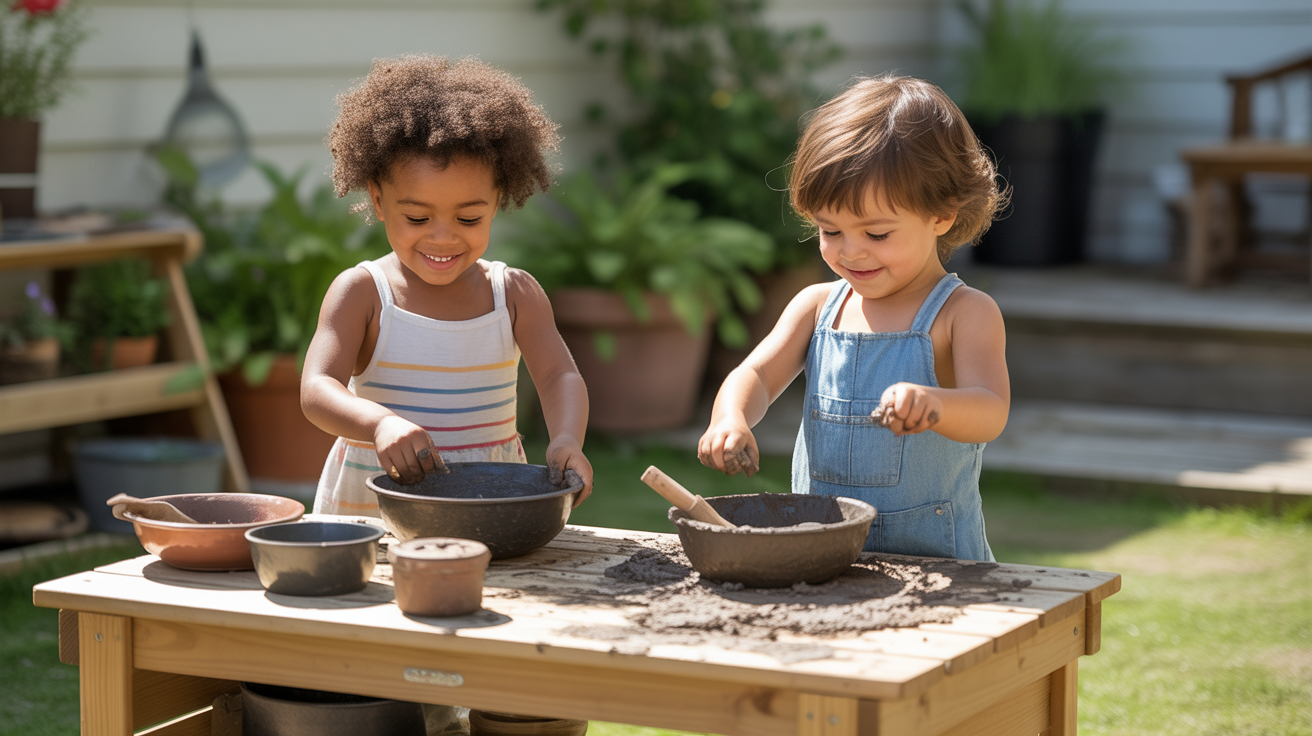

Mud kitchen ideas have become very popular with parents in the United States who want simple, meaningful, and fun outdoor experiences for their children. A mud kitchen is not just a trend. It is a powerful way to support early childhood play, creativity, and real-world learning.
When children mix mud, water, leaves, and imagination, they are not just playing. They are building memories, confidence, and life skills through hands-on learning.
This guide explores practical and creative mud kitchen ideas that work in large backyards and small outdoor spaces. It focuses on safety, learning value, and long-term use while keeping things affordable and realistic for families.
What Is a Mud Kitchen and Why Kids Love It
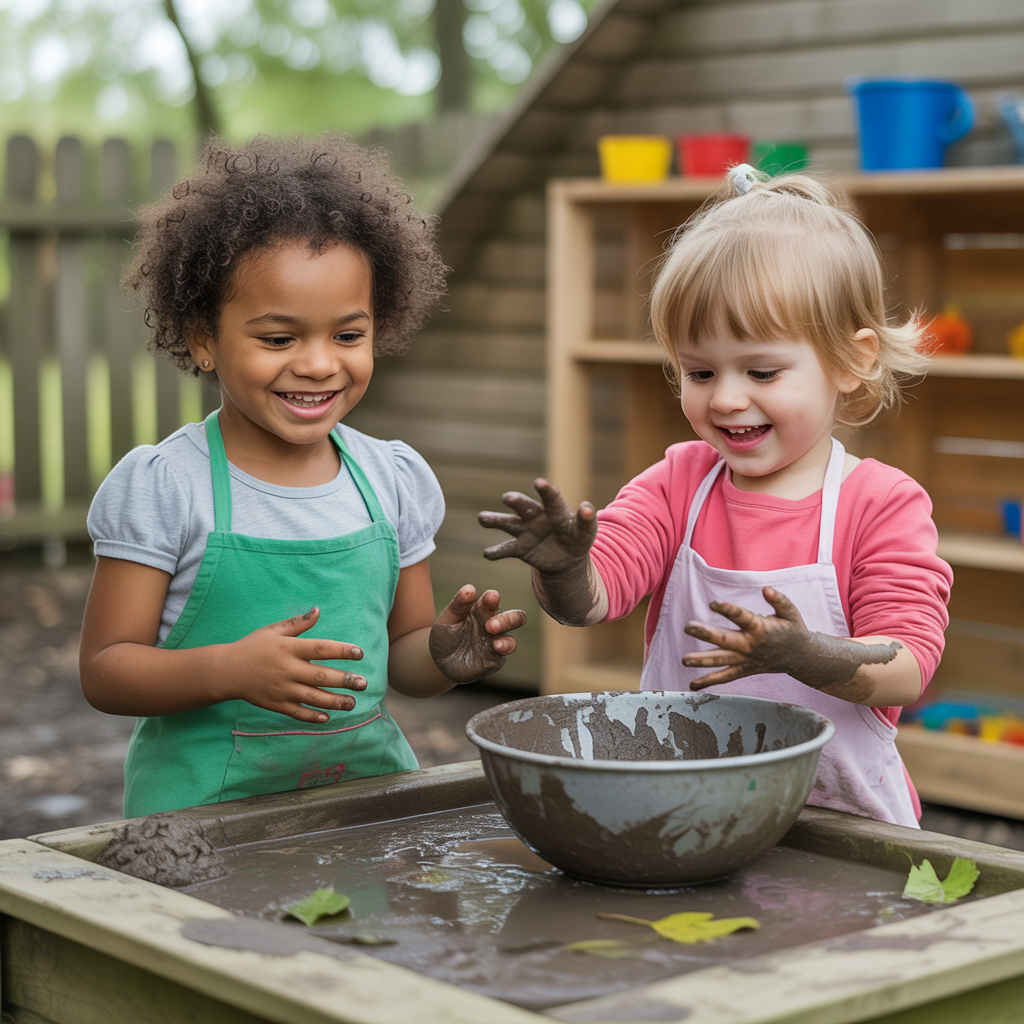
A kids mud kitchen is an outdoor play space where children pretend to cook using mud, water, and natural items. It works like a pretend play kitchen, but instead of plastic food, kids use dirt, stones, and leaves. This simple idea creates deep engagement because children feel free to experiment without rules.
Kids love a mud play station because it gives them control. They decide what to cook, how to mix, and who to serve. This type of child-led play builds confidence and supports imagination and teamwork.
When children play together, they practice role play, communication, and sharing. Many educators describe mud kitchens as an outdoor classroom because children learn naturally through action.
Research on learning through play shows that open-ended play helps develop problem-solving skills and emotional regulation. A homemade mud kitchen also supports sensory play by letting kids feel textures, temperatures, and movement. This rich sensory experience is especially helpful for toddlers and preschoolers.
Best Places to Set Up a Mud Kitchen Outdoors
Choosing the right place for a backyard mud kitchen makes play easier and safer. The best spot is visible from the house, partly shaded, and close to a water source. This allows parents to supervise while children enjoy free play.
A corner of the yard near a fence or wall often works well. This creates a defined outdoor play area without taking over the entire space. For families with limited room, patios and side yards can still support outdoor pretend kitchen setups.
Many parents ask, how to build a mud kitchen in a small yard. The answer is to think vertically. A narrow wall-mounted counter or pallet kitchen still supports creative outdoor play. Water access is important. A hose, water basin, or even a clean water bucket can work. Shade helps children stay comfortable and extends playtime.
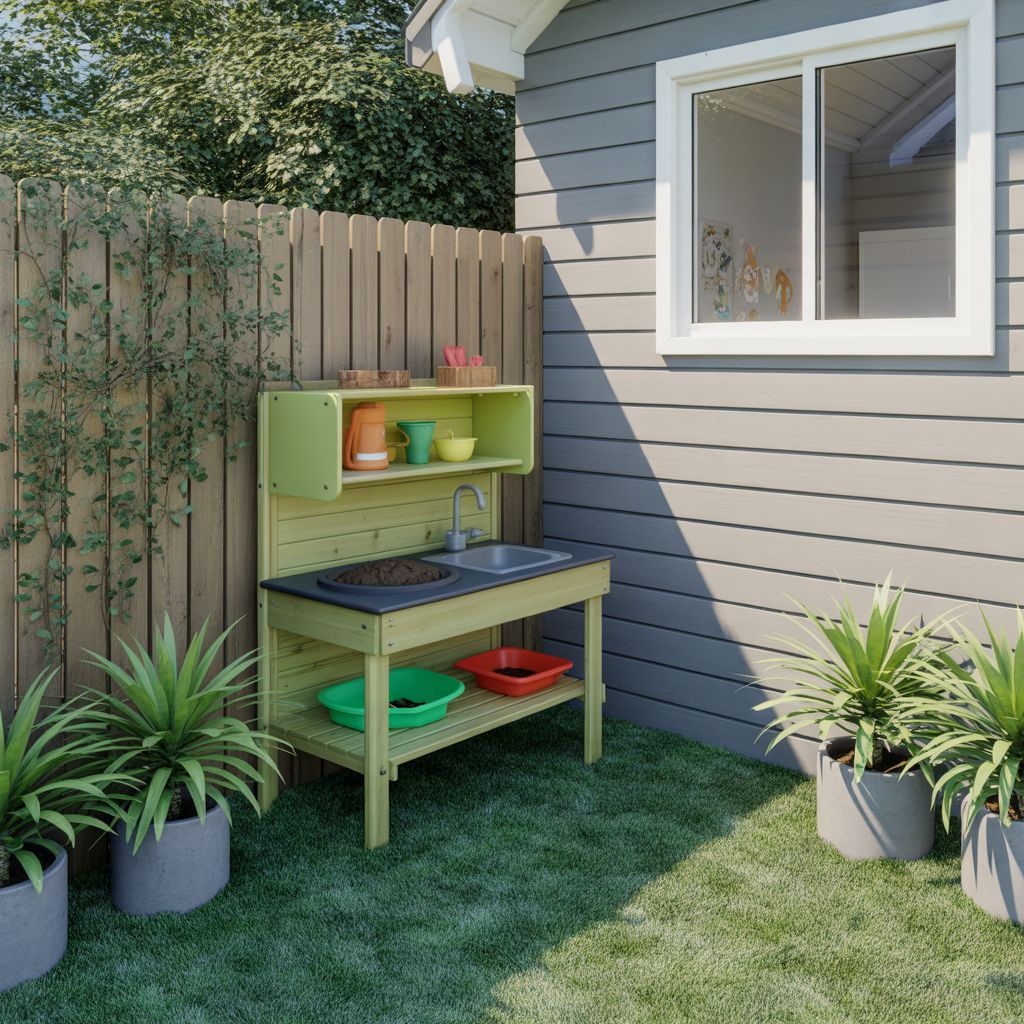
Simple Mud Kitchen Ideas You Can Build at Home
Simple DIY mud kitchen projects do not require advanced skills. Most successful kitchens start with one surface, one shelf, and space for mixing. A basic table can become an outdoor play kitchen in minutes.
Using repurposed furniture like old benches or tables saves money and reduces waste. A sturdy surface gives children confidence to explore. Parents often overbuild, but kids need freedom more than perfection. A simple sturdy setup encourages exploration and experimentation.
Many families complete a homemade mud kitchen in one afternoon. Children can help with painting or naming their kitchen. This involvement increases pride and long-term interest. Simple builds also allow easy changes as children grow.
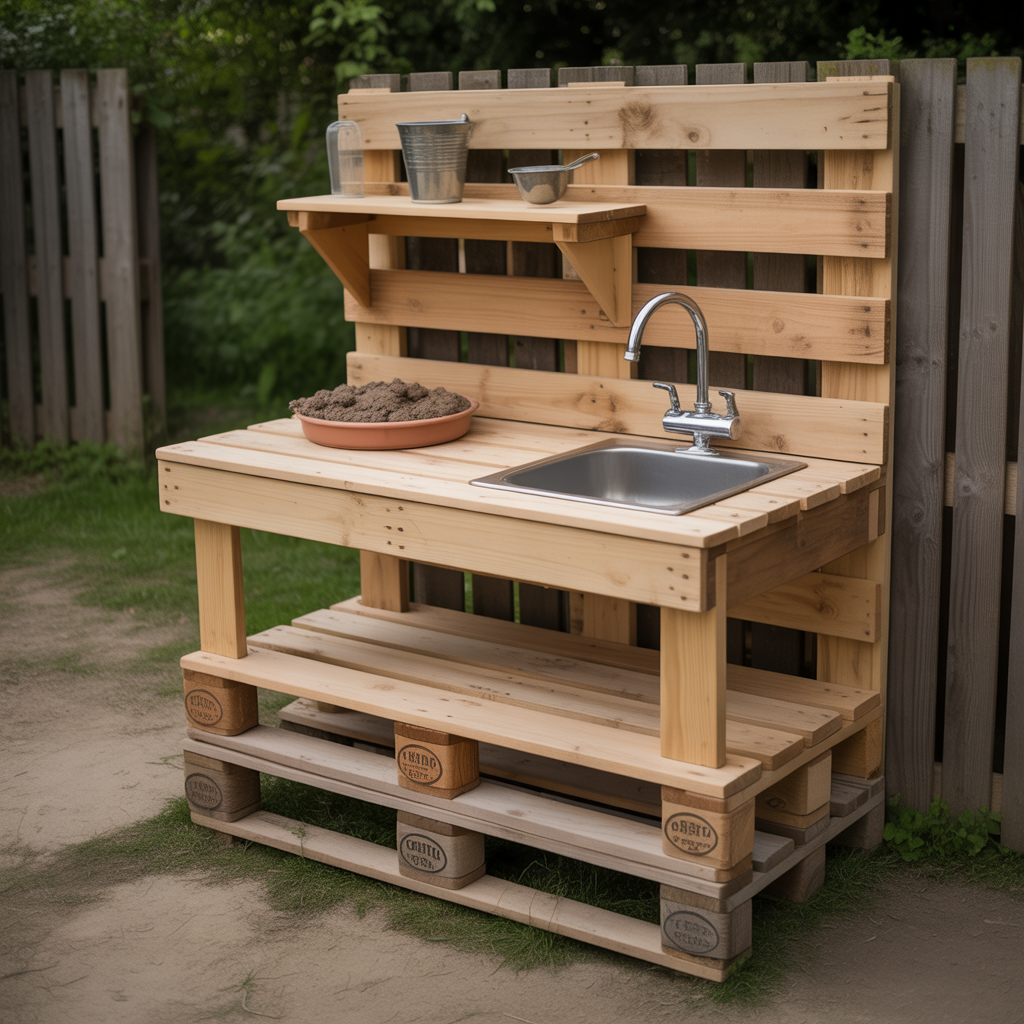
Budget-Friendly Mud Kitchen Ideas Using Recycled Materials
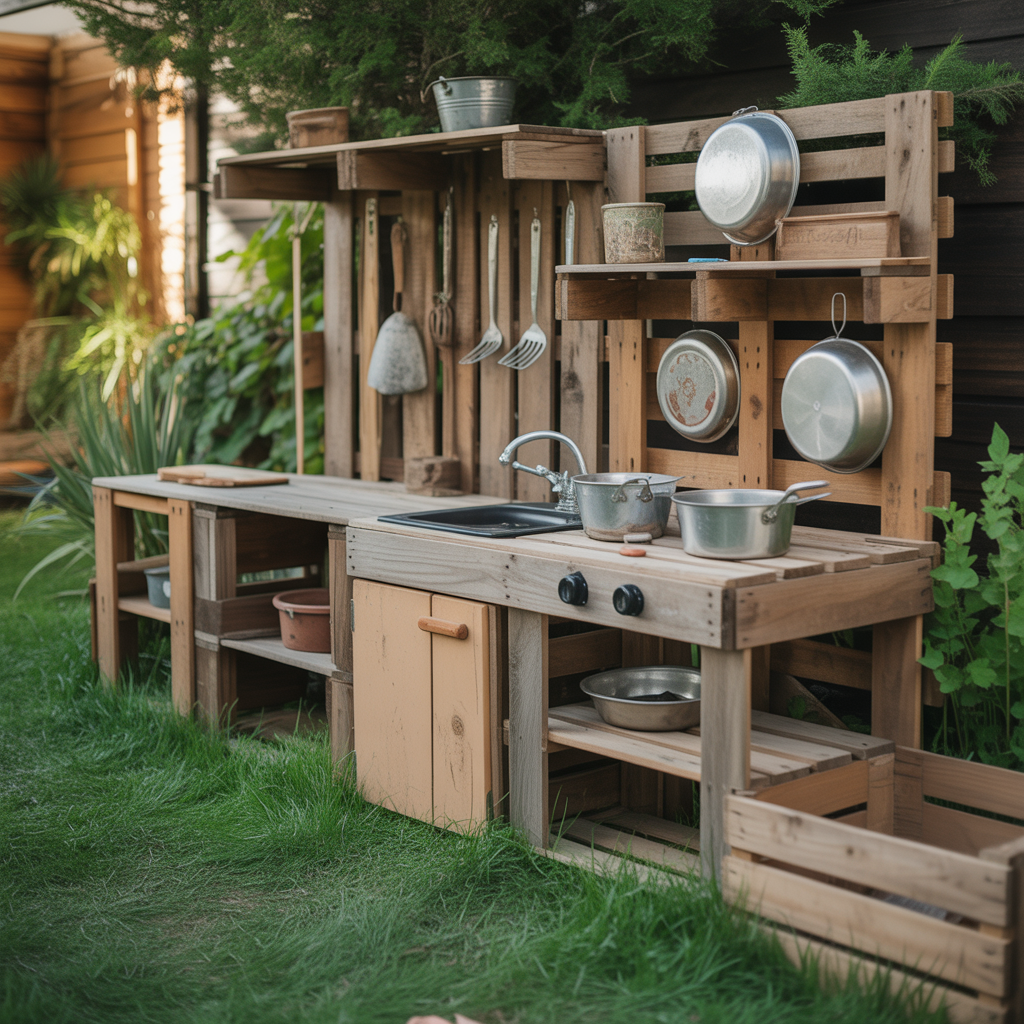
Some of the best budget mud kitchen ideas use items already at home. Recycled play materials such as wooden crates, pallets, and old cabinets work beautifully outdoors. Using pallets is especially popular because they are easy to find and very strong.
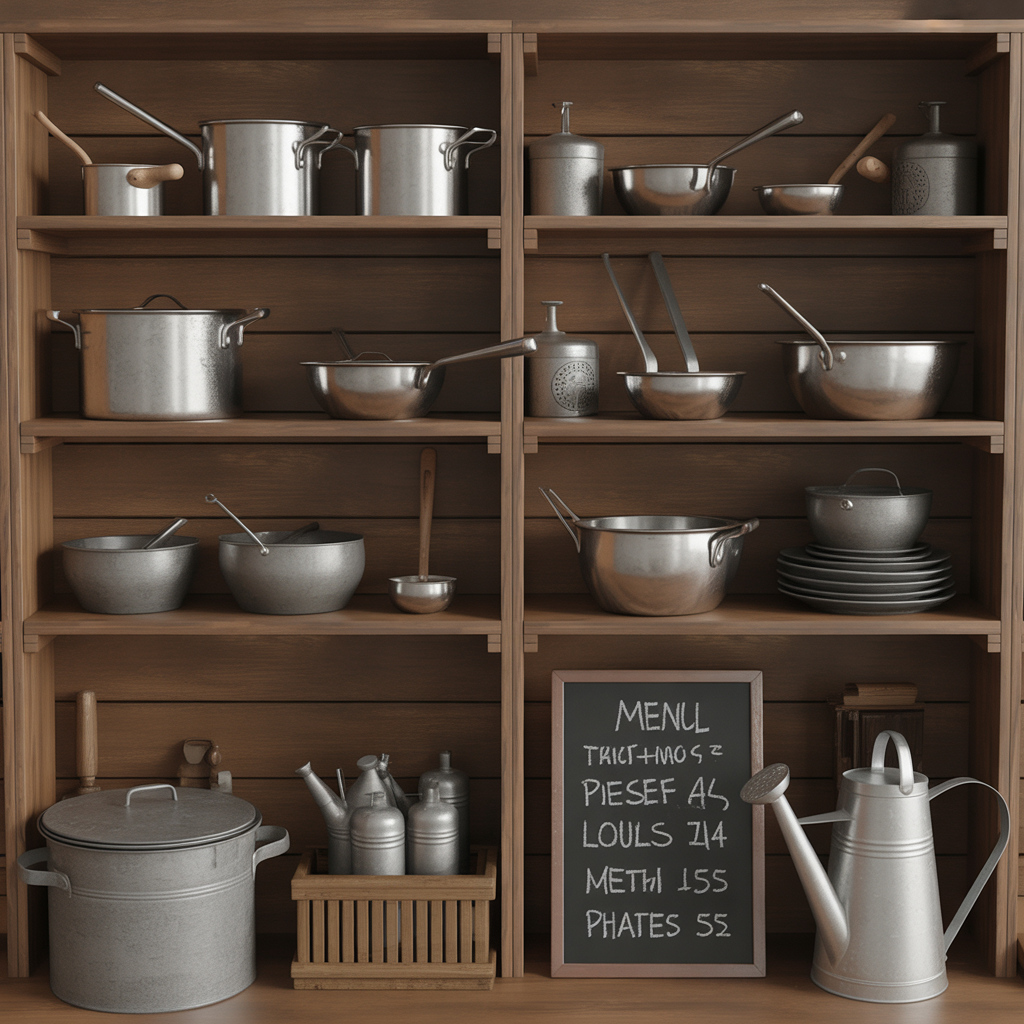
Thrift stores are ideal for finding old pots and pans, metal mixing bowls, and baking tools. These items last longer outdoors than plastic and feel more real to children. This realism deepens imaginative play.
Cost Comparison of Common Mud Kitchen Materials
| Material Source | Estimated Cost | Durability Level |
| Old table at home | $0 | High |
| Thrift store items | $10–$20 | Medium to High |
| Pallet wood | $0–$15 | High |
| Plastic toy kitchen | $80+ | Low |
This table shows that recycled options offer better value and long-term durability.
Must-Have Mud Kitchen Accessories for Imaginative Play
Accessories bring a kids mud kitchen to life. Simple tools such as ladles and spoons, bowls, and measuring cups support storytelling and creative exploration. Children love tools that feel real.
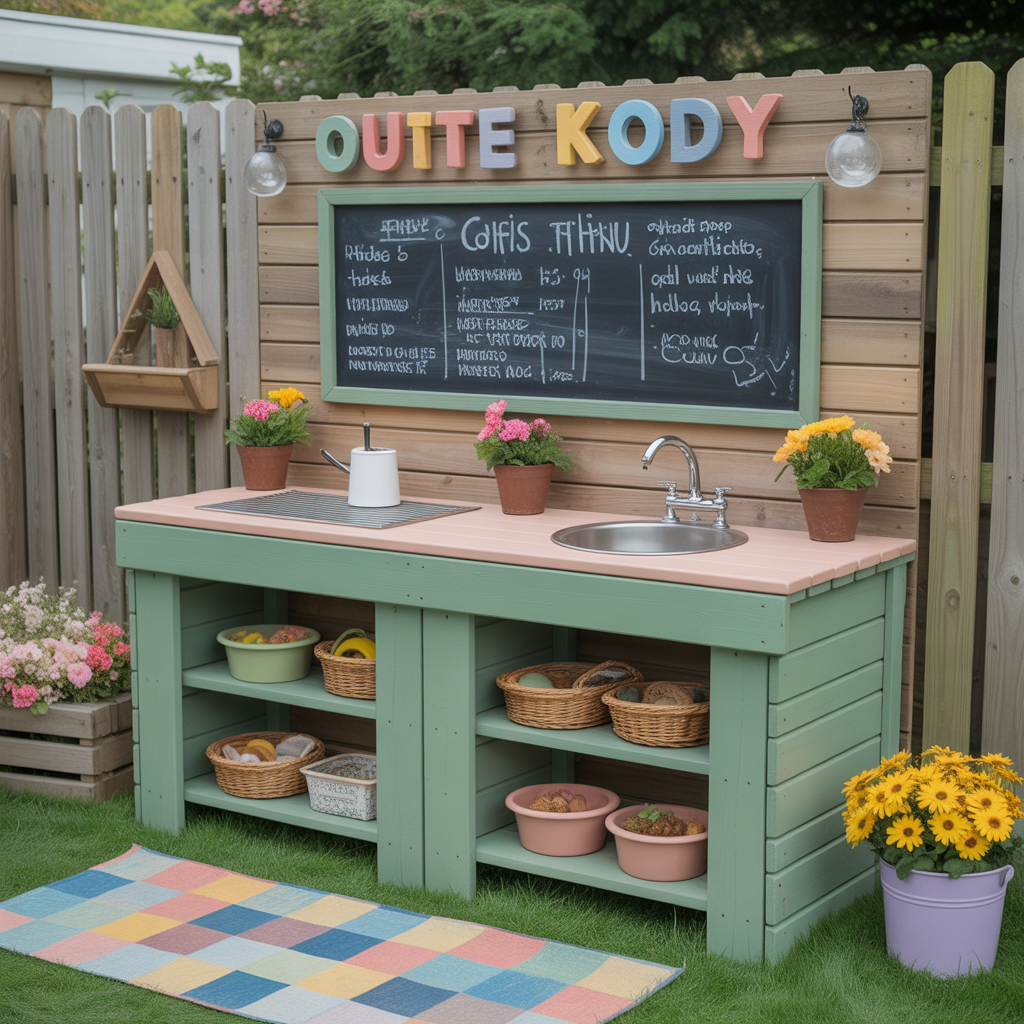
Adding a sink basin allows washing and pouring, which supports hands-on learning. A chalkboard menu lets kids write recipes and prices, building early literacy and math skills. Pretend stove knobs add realism and increase engagement.
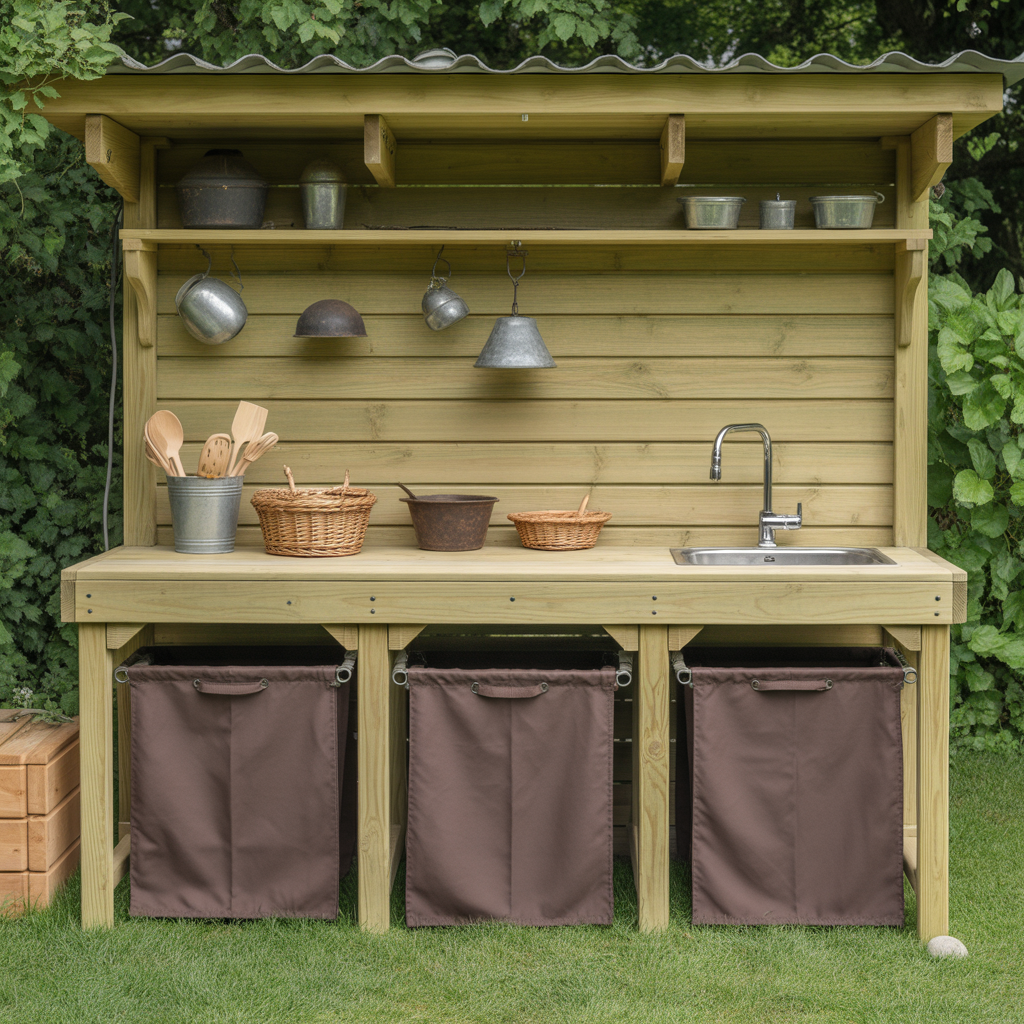
Storage matters too. Storage bins, trays and containers, and hooks keep tools organized. Rotating tools weekly supports accessory rotation, which keeps play fresh without buying more items.
Creative Mud Kitchen Themes and Design Ideas
Themes help children dive deeper into play. A bakery theme encourages measuring and mixing. A garden café connects food with nature. These ideas support nature play and storytelling.
Painting the kitchen using non-toxic paint allows personalization. Children who help design their space feel ownership and stay engaged longer. This supports creative outdoor play and emotional connection.
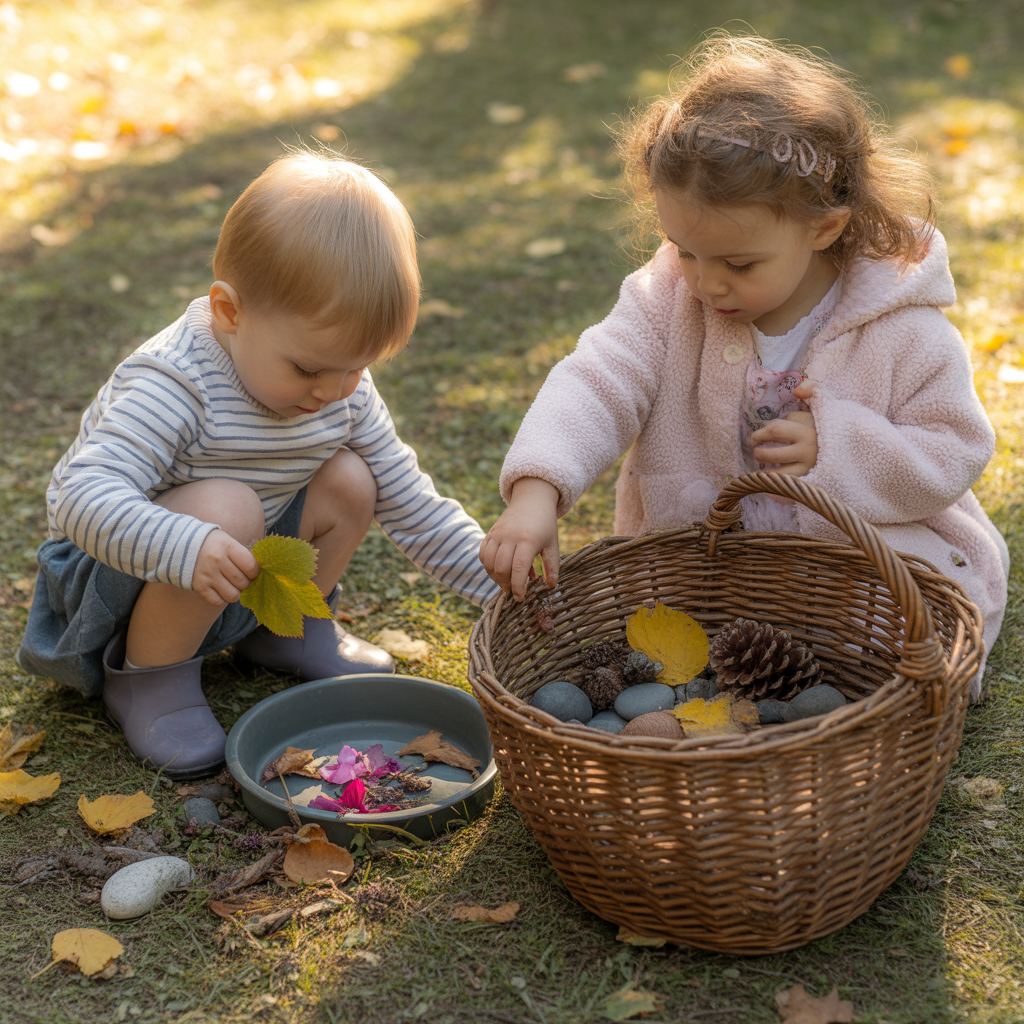
Seasonal changes also keep interest high. In spring, kids use flowers and herbs. In fall, they cook with leaves and pinecones. This natural change supports outdoor learning activities year-round.
Natural Elements to Add for Sensory and Learning Play
Nature is the heart of every mud kitchen. Items like leaves, stones, flower petals, and pinecones become ingredients for pretend meals. A small foraging basket encourages exploration before cooking begins.
Using soil tubs, garden elements, and a water basin adds depth to play. Children learn cause and effect when mixing dry and wet materials. These experiences support problem-solving skills and science understanding.
Seasonal changes introduce new seasonal ingredients. Herbs smell different, leaves change texture, and mud reacts differently in heat or cold. This natural variety keeps children curious and engaged.
Mud Kitchen Safety, Hygiene, and Supervision Tips
Safety builds trust. All surfaces should have smooth surfaces and sanded corners. Using child-safe materials reduces risk. Water-based finishes and weather-resistant wood such as cedar wood or acacia wood last longer outdoors.
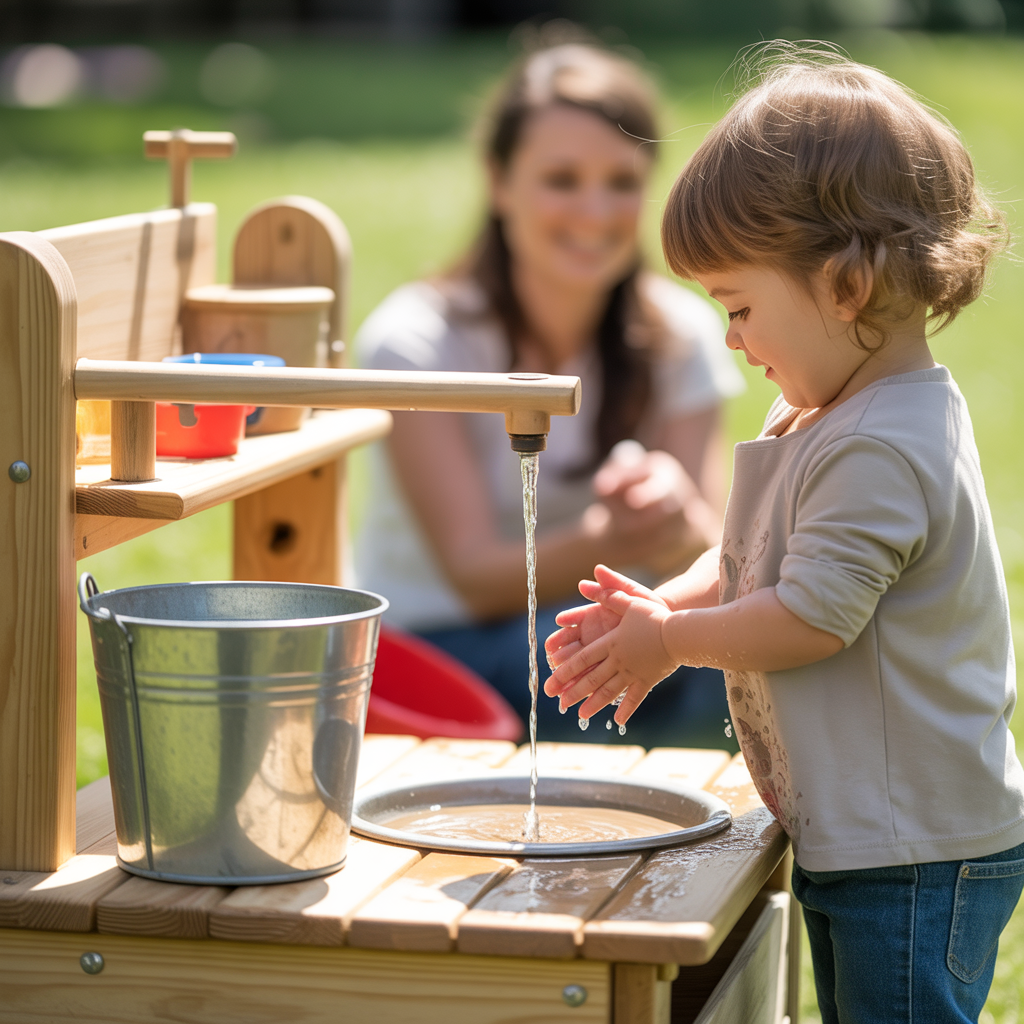
Setting rules helps manage mess. Creating a designated mud zone keeps dirt outside. A nearby hand washing station, wipes for cleanup, or clean water bucket makes transitions easy. Clear hygiene boundaries help children learn responsibility.
Active supervision is important, especially for younger kids. With guidance, messy play for kids stays fun and stress-free.
How to Maintain and Store a Mud Kitchen Year-Round
Maintenance protects your investment. Applying a protective sealant once a year supports weatherproofing and prevents damage. This annual sealing improves wood maintenance and safety.
Accessories should be stored in covered bins when not in use. This keeps tools clean and helps with outdoor storage. Some families use a collapsible structure or modular setup for seasonal changes.
Regular seasonal upkeep allows the kitchen to grow with the child. A well-maintained kitchen offers years of kids outdoor activities and learning.
Final Thoughts: Making Mud Play Fun, Safe, and Meaningful
A mud kitchen does not need to be perfect. The real value lies in laughter, creativity, and connection. Through outdoor learning activities, children build skills that last a lifetime.
Whether you start with a single table or a full outdoor pretend kitchen, the goal is simple. Give children space to explore, imagine, and learn. With thoughtful design and care, mud kitchen ideas can transform everyday dirt into powerful learning experiences and unforgettable childhood moments.
FAQs About Mud Kitchen Ideas
Q1. How do you build a mud kitchen at home?
A: You can build a mud kitchen using a sturdy table or pallets, add basic shelves, and include simple items like bowls, pots, and a water tub for outdoor play.
Q2. What is the best age for mud kitchen play?
A: Mud kitchens are ideal for children aged 2 to 8 years, as they support sensory exploration for toddlers and imaginative role play for older kids.
Q3. Can I set up a mud kitchen in a small backyard or patio?
A: Yes, a compact or wall-mounted mud kitchen works well in small yards, patios, or decks while still encouraging creative outdoor play.
Q4. Is mud play safe for kids?
A: Mud play is safe when child-safe materials are used, surfaces are smooth, and children are supervised with clear hygiene rules in place.
Q5. Do mud kitchens require regular maintenance?
A: Mud kitchens need minimal upkeep, such as seasonal cleaning, storing accessories in covered bins, and sealing wooden surfaces once a year.

 By
By