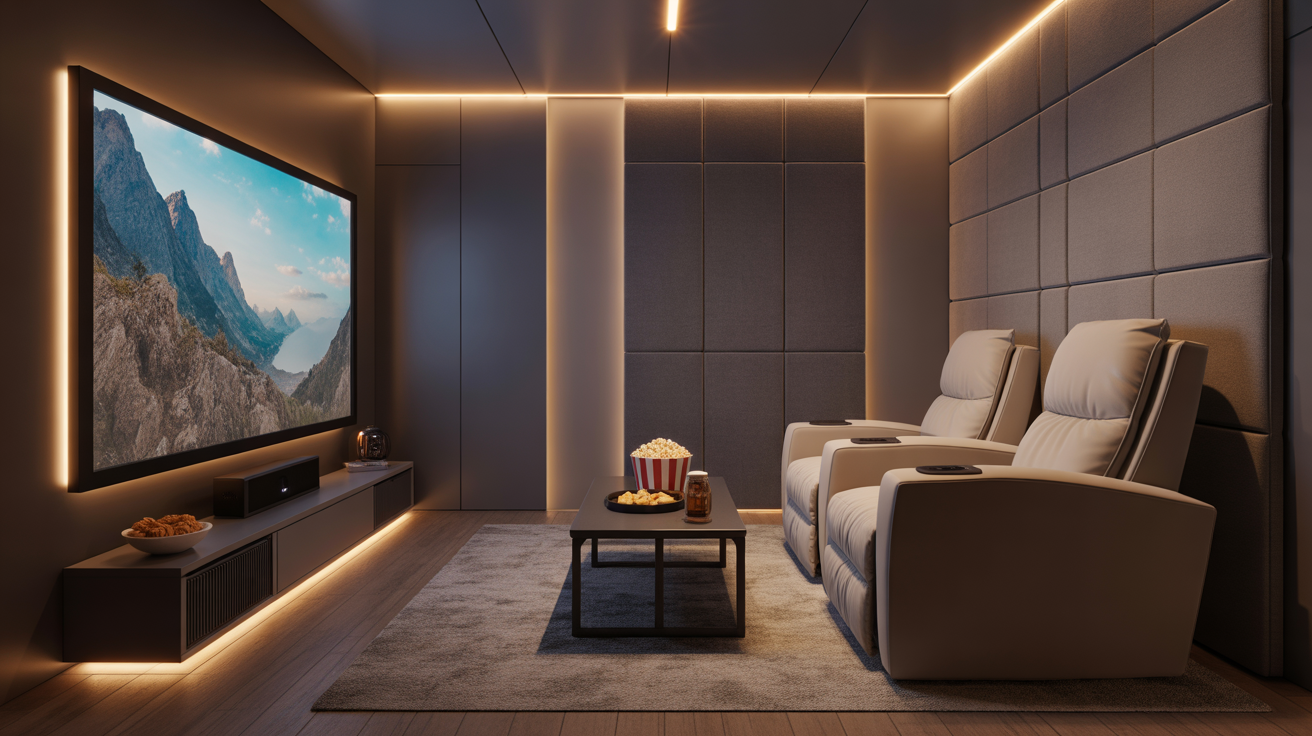

Designing a small room home theater can feel overwhelming at first. Many people think that small spaces limit your options, but the truth is quite the opposite. Compact spaces can make your theater experience more immersive. The screen feels bigger, the sound wraps tighter, and the room can feel like a personal cinema. The secret is in the room layout design. From short wall placement for screens to sofa placement and speaker angles, every detail matters. In this article, we will explore everything you need to know to make your small theater room comfortable, functional, and cinematic.
Choosing the Right Room for Your Home Theater
Selecting the right room is the first step toward building a small home theater. Consider room size and shape, as rectangular rooms with longer walls often create better acoustics in small rooms compared to square spaces. Windows can be both a blessing and a challenge. Large windows provide natural light but require blackout curtains to control glare and reflections. Noise isolation is another critical factor. Rooms facing busy streets or high-traffic areas inside the house may require soundproofing to ensure a high-quality viewing experience.
When picking a space, think about how the room functions smoothly. Avoid multipurpose rooms that might interrupt the immersive experience. Tight spaces can be optimized by careful walkways and flow planning. You want enough doorways and clearance so people can enter and exit without disturbing the viewing experience. A small but well-chosen room can offer the perfect combination of intimacy and cinematic impact.

Screen and Projector Placement Tips
Proper screen placement is vital for a successful home theater. If you are using a TV or projector, the center of screen at eye level is recommended to prevent neck strain and maintain natural viewing angles. For projectors, projector throw distance is critical. Many budget projectors can comfortably fill a 100-inch screen from just 8 to 10 feet away, making them ideal for compact spaces. You can choose between ceiling mounts and rear wall shelves, depending on whether you want a permanent setup or a flexible solution.
It is important to avoid glare and maintain clear sightlines. Position screens so that reflections from lights and windows do not disrupt the image. TV vs. projector setups require different considerations. TVs are easier to place but may look small in tight spaces, whereas projectors create a cinematic effect but need careful screen height and distance planning. Proper placement transforms a simple small theater room into an immersive viewing environment.

Seating Layouts for Comfort and Viewing
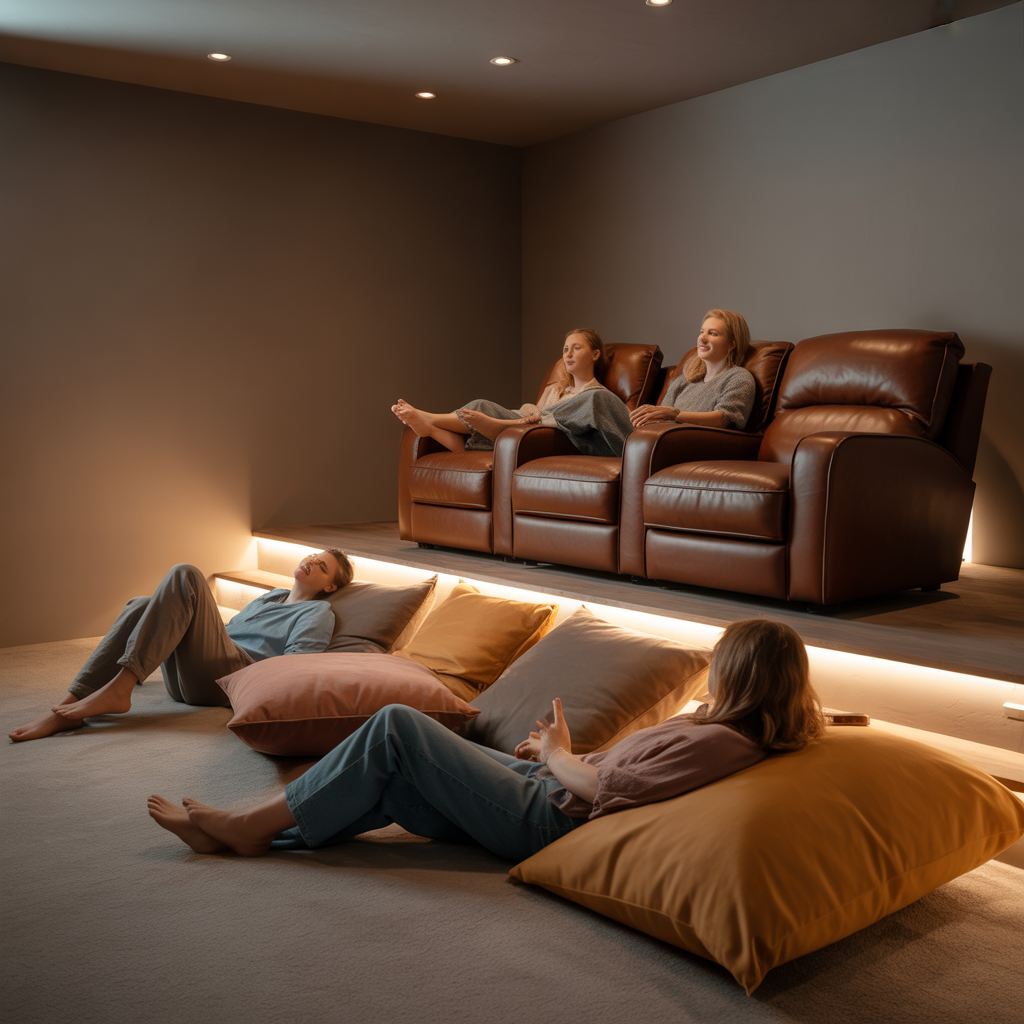
The seating layout is another key factor in a small home theater. Single row vs. multiple rows depends on your room size. Small rooms often work best with a single row of seats, but adding a small riser can allow a second row without blocking sightlines. The type of seating also matters. Loveseat seating or wall-hugger recliners can maximize space while providing cozy and comfortable seating. Floor cushions and bean bags are excellent for extra guests, and riser platforms ensure everyone has a clear view.
Proper seating distance from screen is critical. Experts recommend sitting approximately 1.5 times the width of your screen. For an 80-inch screen, this translates to about 10 feet. This distance ensures an immersive experience without overwhelming your vision. Correct sofa placement also enhances sound perception, making the audio feel natural and balanced.
Sound System Setup and Acoustics
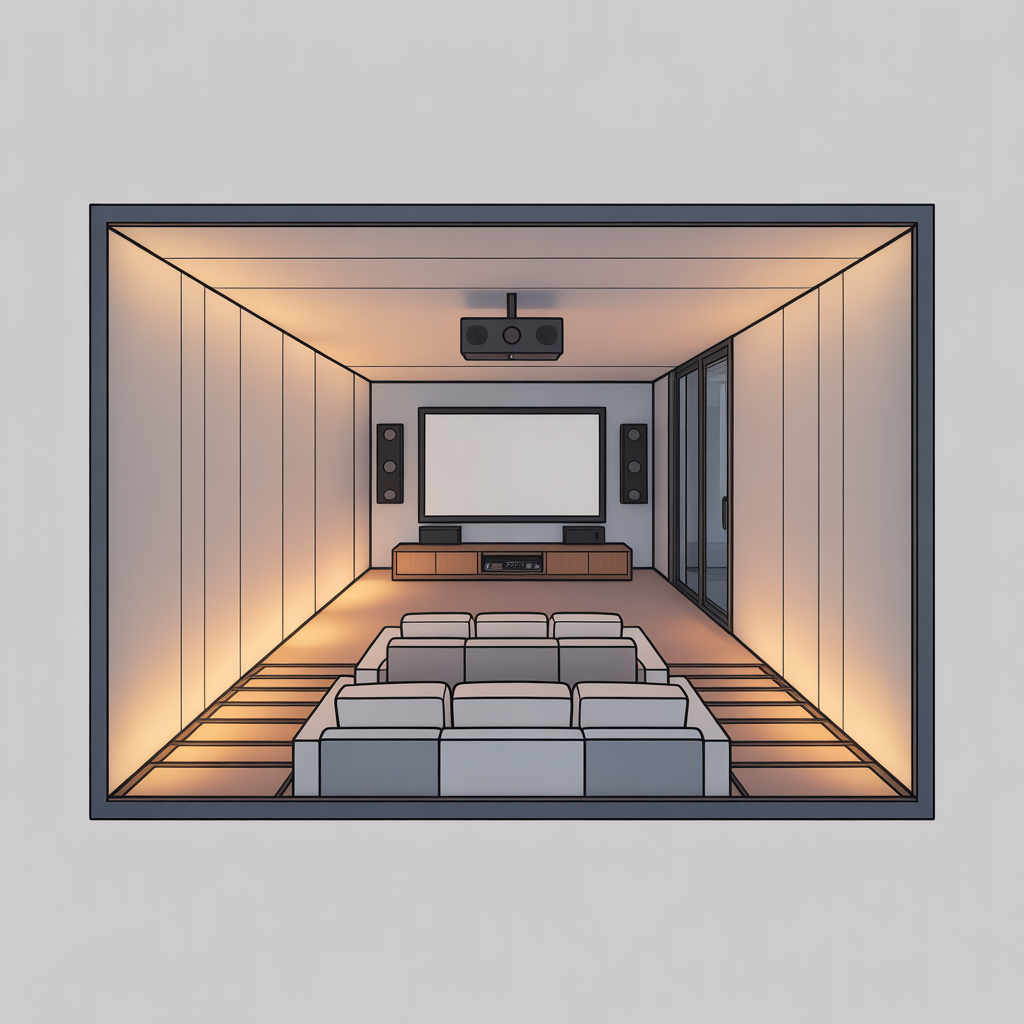
Sound is the soul of any small theater room. A well-planned sound system layout ensures dialogue clarity and enveloping audio. Speaker angles should be carefully set for 5.1 surround system setups, with front speakers at ear height and rear speakers just above ear level. Subwoofer placement is crucial to avoid overpowering bass or vibrations. Corners often work best, but moving the subwoofer slightly can improve balance.
Acoustics in small rooms can be enhanced with rugs and curtains for acoustics and light wall treatments. Even a plush rug under the seating area can significantly improve sound clarity. Budget-conscious setups can rely on mid-range soundbars with wireless subwoofers and virtual surround sound to simulate high-end experiences. The goal is to make the sound rich and immersive without overcrowding the room.

Lighting Solutions for Mood and Function
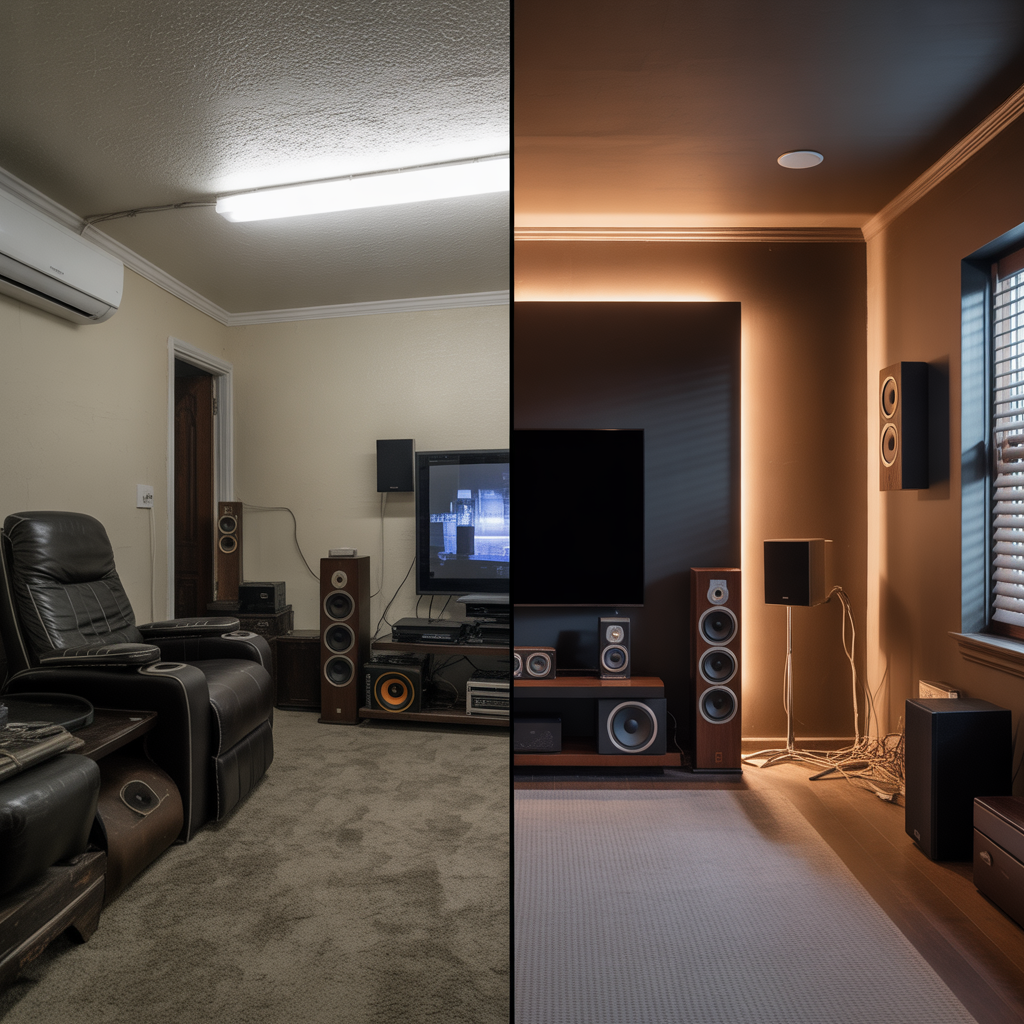
Proper lighting placement transforms the ambiance of a small home theater. Layered lighting works best, combining LED strips behind screen, wall sconces, and small lamps for indirect lighting. Dimmers allow control over brightness to create a cinema vibe lighting. Warm lighting in the range of 2200K–2700K provides a cozy atmosphere without glare. Glare control is essential to prevent reflections on screens. Blackout curtains not only block sunlight but also muffle outside noise, adding to the immersive feel.
Lighting should balance mood and visibility. For example, LED strips behind the screen create a subtle glow, while wall sconces provide ambient light without distracting viewers. Avoid bright ceiling lights that wash out the image, as this is a common mistake in small home theater design tips.

Doorways, Walkways, and Room Flow
Even a small room can feel spacious with careful planning of doorways and clearance. Allow at least 24–30 inches of clearance for easy movement. The position of doors affects the walkways and flow. Swinging doors may disrupt the layout, so sliding doors or doors that open outward are excellent alternatives. Maintaining clear walkways and flow prevents the room from feeling cramped and ensures that the theater remains functional even when multiple people are moving in and out.
A well-planned layout also enhances the overall room layout design. People can move without disturbing seated viewers, and the room feels intentional rather than improvised.
Storage and Personalized Decor
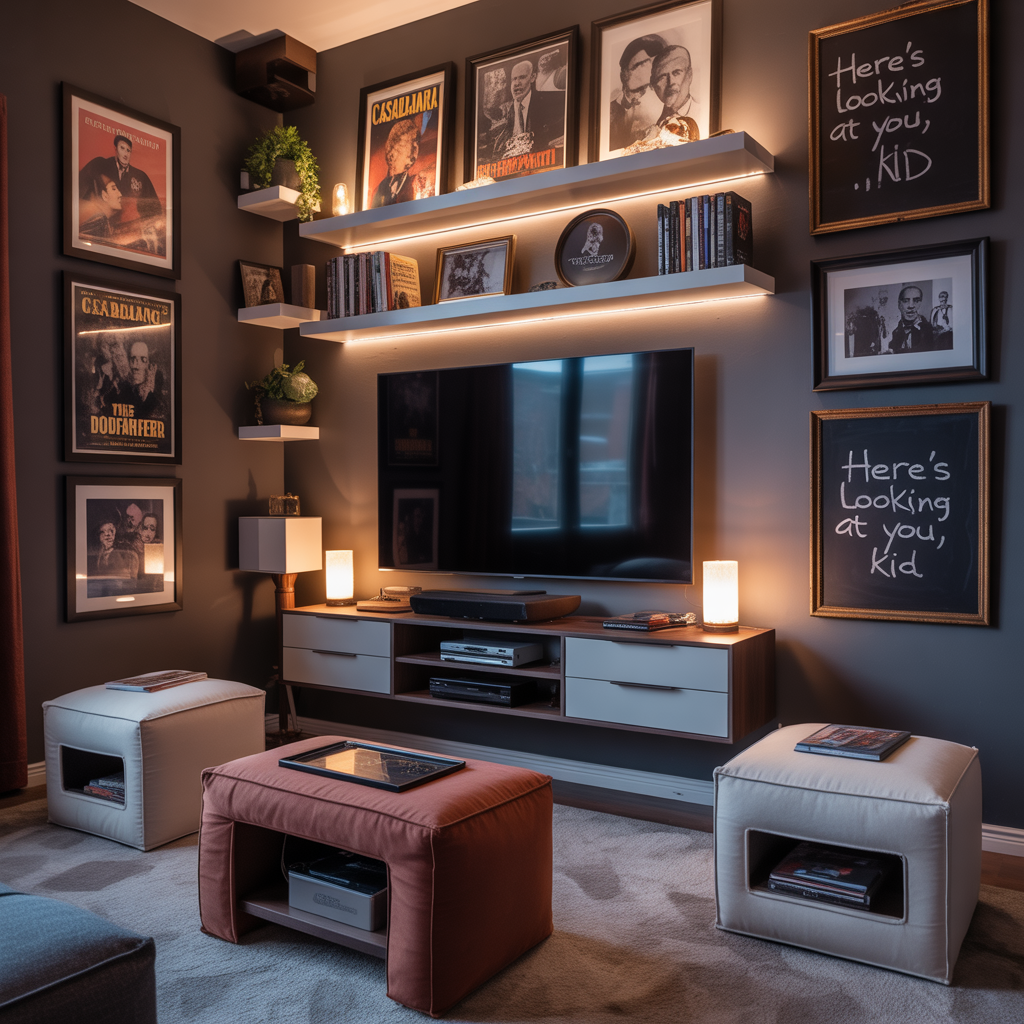
A cluttered room can ruin even the best small home theater room layouts. Efficient media storage with floating shelves, slim media console, and ottomans for storage keeps equipment organized and accessible. Cable management ensures a clean look, preventing tripping hazards and unsightly wires.
Personal touches enhance the theater experience. Posters, DIY chalkboards, and ticket stubs and memorabilia make the space feel unique. Decor personalization adds charm without compromising functionality. A mix of functional storage and personalized decor ensures the room looks good and functions smoothly.
Small Home Theater Layout Ideas and Inspiration
There are many creative ways to design a small home theater room. For apartments, a single row of loveseat seating with a wall-mounted screen often works best. L-shaped rooms can accommodate corner screen setups, while modular furniture allows flexible seating arrangements. Tips to maximize space without a renovation include using riser platforms, wall-hugger recliners, and floating shelves to keep the floor area open. Even in tight spaces, careful planning can create a fully immersive and functional theater.

Common Mistakes to Avoid in Small Home Theaters
One of the most common errors is overstuffed seating, which blocks sightlines and makes the room feel cramped. Seating too close to the screen can cause eye strain, while poor speaker placement ruins the sound experience. Bright ceiling lights and blocked walkways are other frequent mistakes. Avoid cluttered rooms and ensure lighting placement, sofa placement, and speaker setup are all carefully planned.
Conclusion
Designing a small home theater is about more than just picking a screen. Choosing the right room, planning seating layout, arranging a sound system, optimizing lighting placement, and adding personalized decor all contribute to a cozy and immersive experience. Remember to leave room for movement, organize your equipment, and personalize your space. With careful planning, even compact spaces can deliver the ultimate cinematic experience. Start with your room layout design, plan every detail, and transform your small space into a perfect home theater.
FAQs
Q1. How far should I sit from the screen in a small home theater?
A: Sit approximately 1.5 times the width of your screen to ensure comfort and an immersive viewing experience.
Q2. Can I fit a 7.1 surround sound system in a small room?
A: Yes, but careful speaker placement and acoustic treatments are essential to avoid echo and maintain dialogue clarity.
Q3. Is a riser necessary for a small home theater?
A: A riser is optional but useful if you want multi-row seating without blocking sightlines.
Q4. What type of seating works best in tight home theater spaces?
A: Loveseats, wall-hugger recliners, or modular seating maximize comfort without overcrowding the room.
Q5. How can I improve sound quality in a small home theater?
A: Use proper speaker angles, subwoofer placement, rugs, curtains, and consider mid-range soundbars or wireless subwoofers for clear and balanced audio.

 By
By