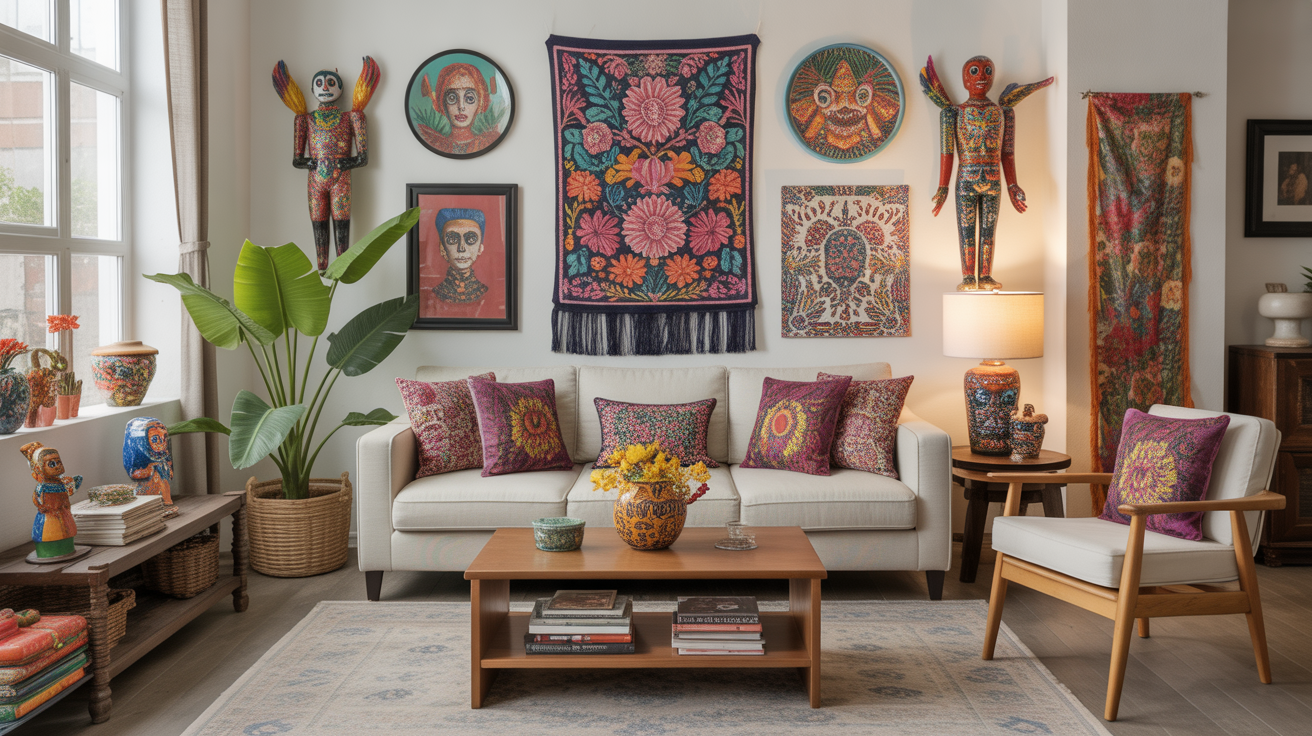

Mexican folk art is more than decoration; it is a celebration of vibrant colors, centuries-old craftsmanship, and cultural storytelling. These colorful folk art pieces carry history, meaning, and a sense of community identity that transforms any home into a space full of warmth and personality. From handmade Mexican art to artisan-crafted decor, each item adds a unique charm and can be a centerpiece in your Mexican home decor. In this article, we explore ten iconic Mexican cultural art pieces that will brighten up any room and inspire soulful decor in your home.
Talavera Pottery – Colorful Ceramics With Timeless Charm
Talavera pottery is one of the most recognizable forms of authentic Mexican decor. It originated in Puebla, Mexico, blending Spanish and indigenous traditions. These ceramics are celebrated for their hand-painted ceramics, intricate patterns, and glowing designs. The UNESCO Intangible Cultural Heritage designation recognizes Talavera for its artisanal craftsmanship and centuries-old techniques.
In modern homes, Talavera can transform a simple space. A kitchen backsplash with Talavera tiles instantly adds visual warmth and bold patterns. Talavera plates, bowls, or vases bring vibrant colors to dining tables, shelves, and mantel displays, creating an inviting atmosphere. One simple trick is to rotate Talavera mugs and bowls in daily use to introduce color without overwhelming the room. Talavera pottery stands out for its perfect balance of tradition and contemporary Mexican home decor, offering both functionality and artistic expression.

Alebrijes – Hand-Carved Figurines Full of Life and Color
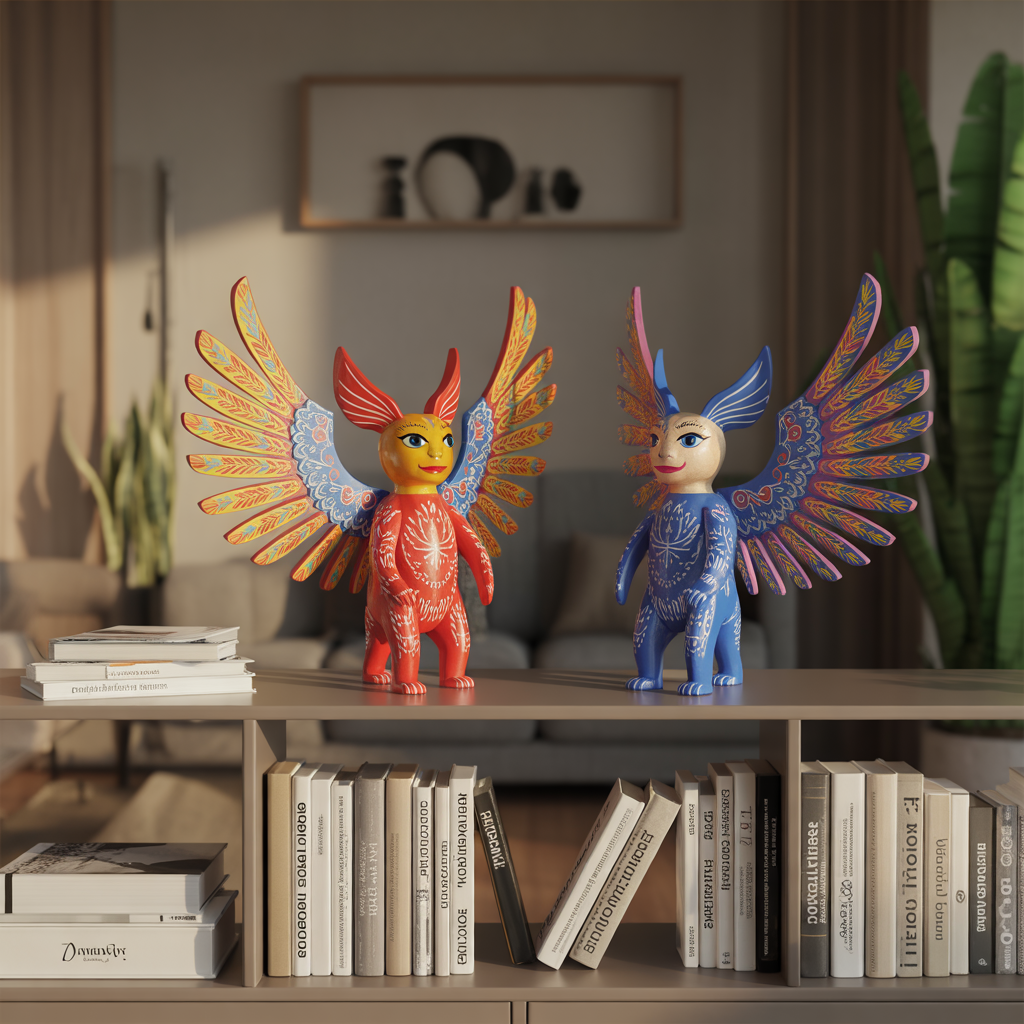
Alebrijes figurines are mythical wooden creatures with bright, whimsical designs. Born in Mexico City in the 1930s by artist Pedro Linares, these pieces represent imagination and ancestral wisdom. Each Alebrije carries handmade imperfections that make it unique, embodying artisanal craftsmanship and cultural storytelling.
For home styling, Alebrijes can be placed on a bookshelf decor, living room console, or desk to act as a focal point decor. Creating a small grouping of these hand-carved wooden figurines forms a mini gallery of charm and personality. Popular designs today include animal hybrids with wings, antlers, or playful forms painted in vibrant colors and whimsical designs. They are not only conversation starters but also help bring a cultural connection into modern U.S. interiors.
Oaxacan Textiles – Vibrant Fabrics That Add Warmth
Oaxacan textiles are handwoven textiles that bring depth, warmth, and a story to your home. Rugs, table runners, and pillow covers are decorated with bold patterns and earthy tones, made using traditional weaving and natural dyes. These textiles are a form of ritual art, reflecting the artisan’s community identity and history.
In a living room, an Oaxacan rug can anchor the floor, while a wall-hanging runner can act as a wall art placement. Throwing an Oaxacan textile over a sofa adds rich textures and personal storytelling. These textiles work well in layered interiors and small space styling, making them perfect for apartments or cozy living rooms.
| Textile Type | Colors | Placement Ideas | Cultural Significance |
| Rug | Earthy reds, indigos, neutrals | Living room floor, entryway | Represents indigenous traditions |
| Pillow Cover | Bold geometric | Sofa, bed | Showcases artisan patterns |
| Wall Hanging | Mixed hues | Hallway, stairwell | Storytelling and ancestral designs |

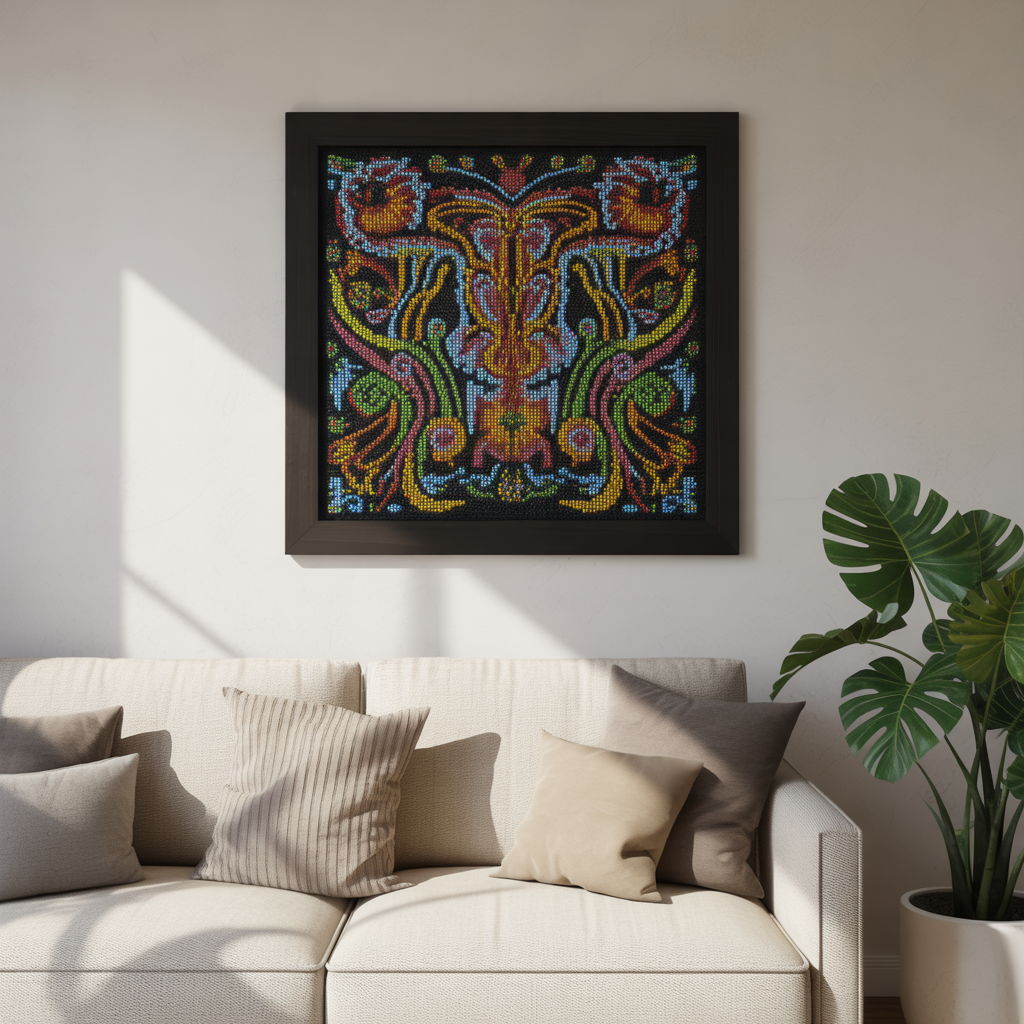
Huichol Bead Art – Spiritual Art With Stunning Detail
Huichol bead art is created with pine-wax beadwork, an ancient pre-Hispanic tradition. The Wixárika people create symbolic designs using thousands of tiny beads, forming glowing designs full of spiritual symbolism. Each piece carries ancestral wisdom and reflects living traditions.
You can use Huichol beadwork as wall art or tabletop decorative pieces. Framed bead sculptures become a focal point decor, while smaller masks or ornaments add subtle charm. Collectors love these pieces for their artisanal details and the cultural heritage they represent. Displaying Huichol art in your home brings warmth and character, while also celebrating traditional Mexican art.
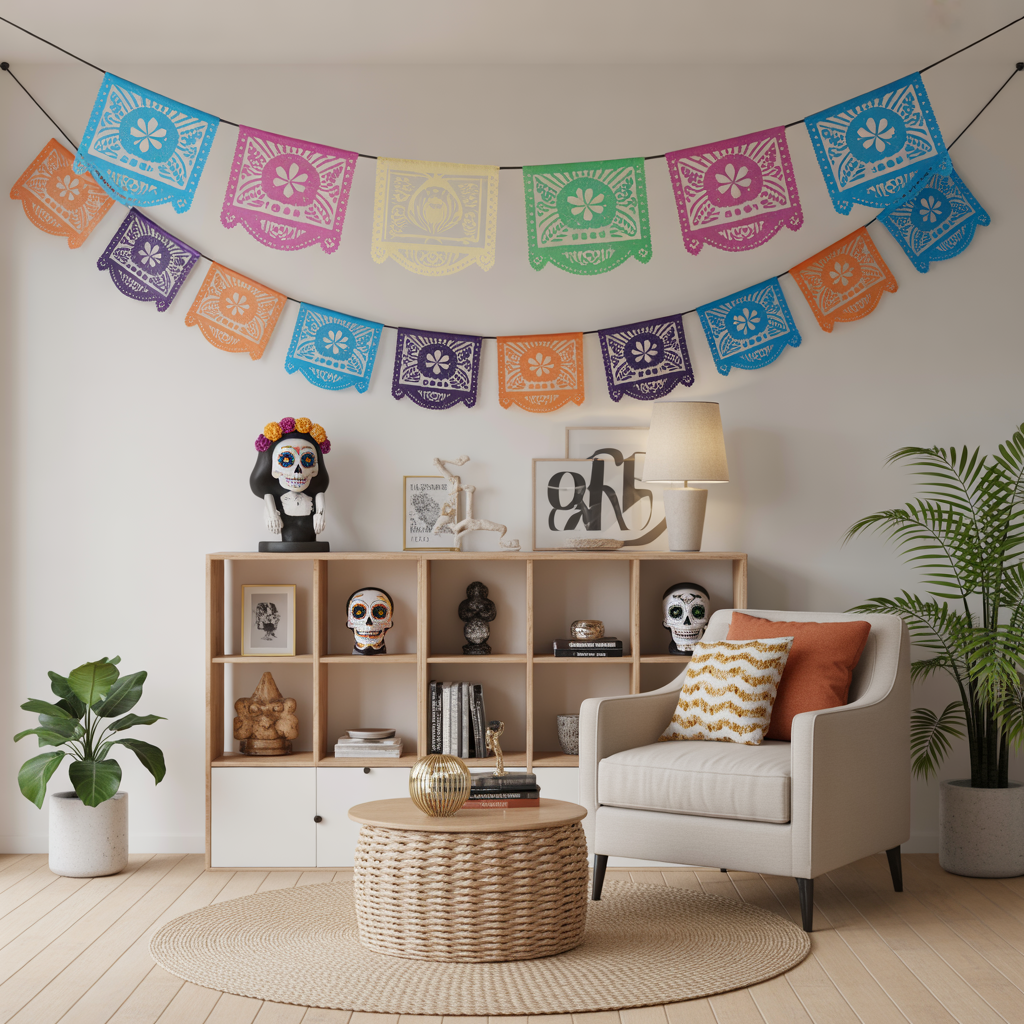
Day of the Dead Folk Art – Celebrating Life Through Decor
Day of the Dead decor is not just for Halloween; it is a joyful celebration of life, memory, and cultural storytelling. Sugar skulls, La Catrina figurines, and miniature altars are common examples of Mexican folk art. Papel picado banners add visual warmth and bold patterns to any room.
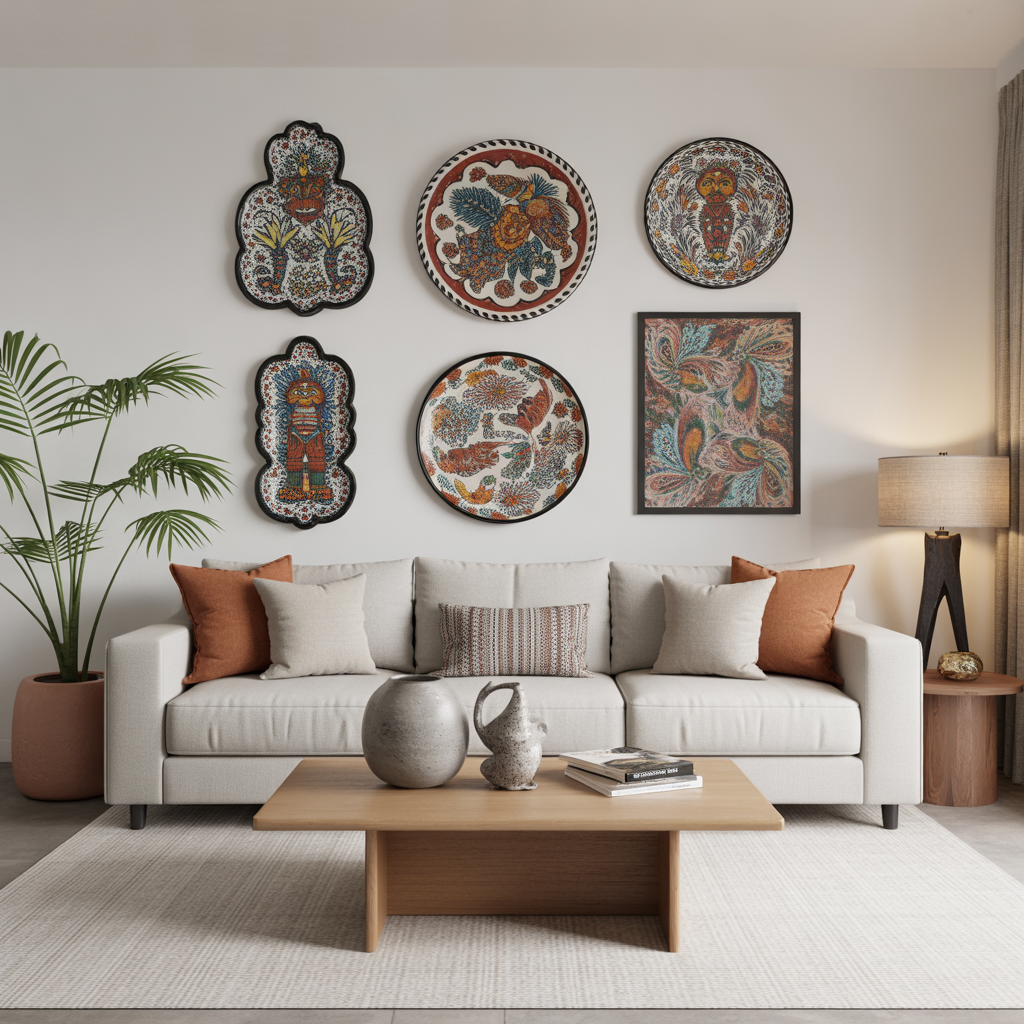
Respectful year-round placement is important. These pieces can be arranged on shelves, mantels, or used in gallery walls. Modern home decor uses Day of the Dead decor to create inviting atmosphere without losing cultural meaning. This artisan-crafted decor blends seamlessly into modern interiors, adding joyful design and deeply personal spaces that are also conversation starters.
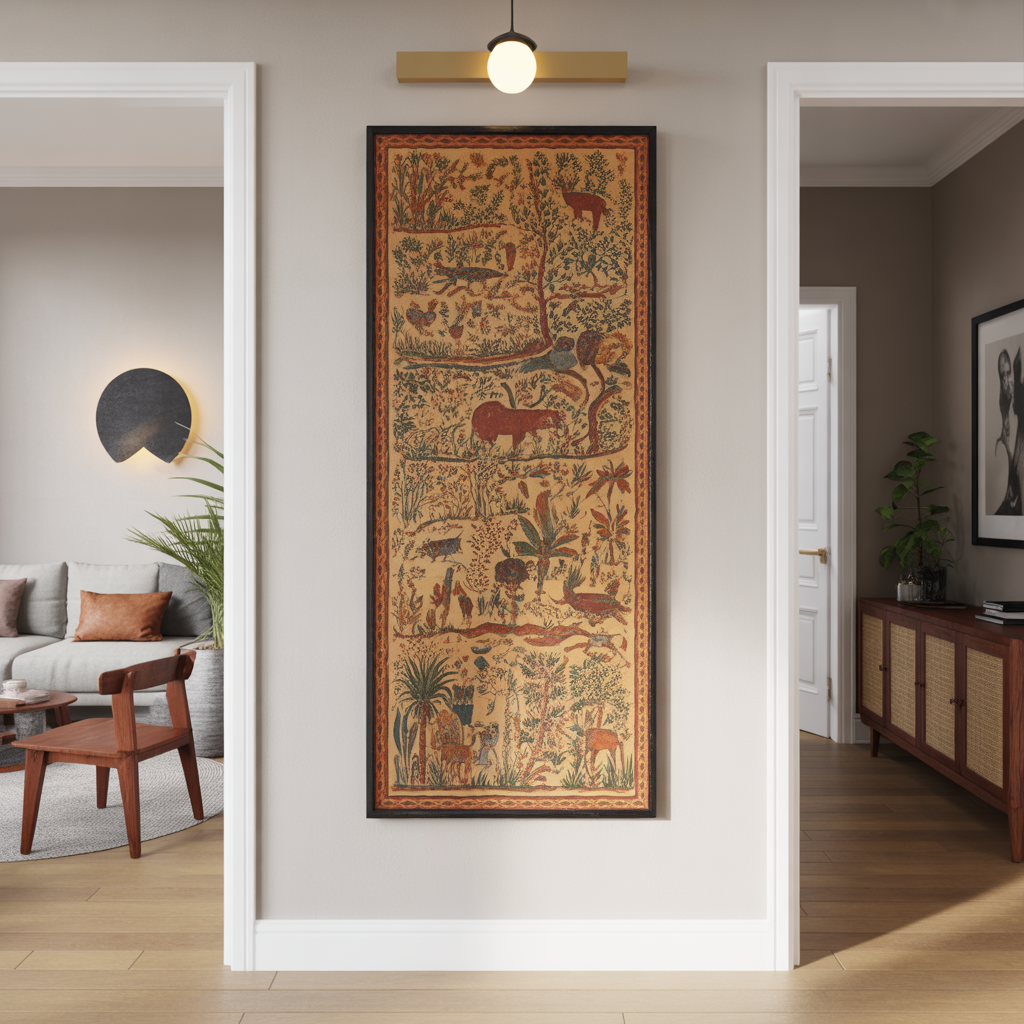
Amate Paper Art – Hand-Painted Nature-Inspired Designs
Amate paper art is created from bark using traditional paper-making processes that date back to pre-Hispanic times. These hand-painted nature-inspired designs often depict village life, wildlife, and folklore. Amate paintings are artisan-crafted decor that brings rich textures and cultural heritage into modern homes.
Framing an Amate paper painting turns a hallway, entryway, or living room into a soulful decor space. These pieces work well as focal point decor in areas where storytelling and personal touch matter. Using Amate paper art adds colorful folk art pieces to your collection, creating a cultural connection in your home.
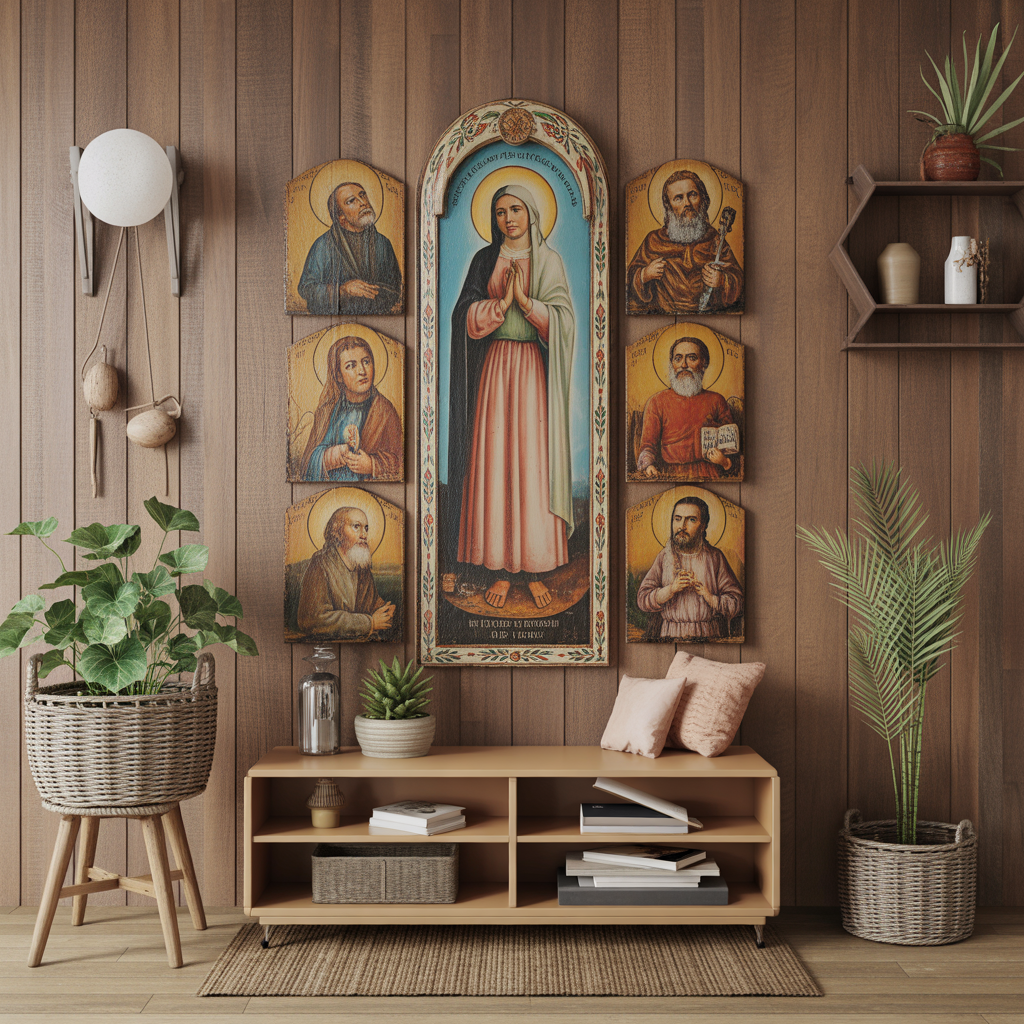
Retablos – Storytelling Paintings With Emotional Depth
Retablos are devotional retablos or tin devotional paintings that depict saints or stories of gratitude. Originating in pre-Hispanic times and evolving over centuries, retablos are an important part of Mexican cultural art. These pieces carry spiritual symbolism and ancestral designs, making them more than just decorative items.
In home decor, retablos fit beautifully in boho and rustic interiors. They can be placed near reading nooks, bedrooms, or intimate corners, adding warmth and character to a room. Authentic retablos are hand-painted, while modern versions may use prints. Including retablos in layered interiors provides deeply personal spaces that reflect cultural storytelling and meaningful decoration.
Mexican Tin Mirrors – Reflective Art With Vintage Appeal
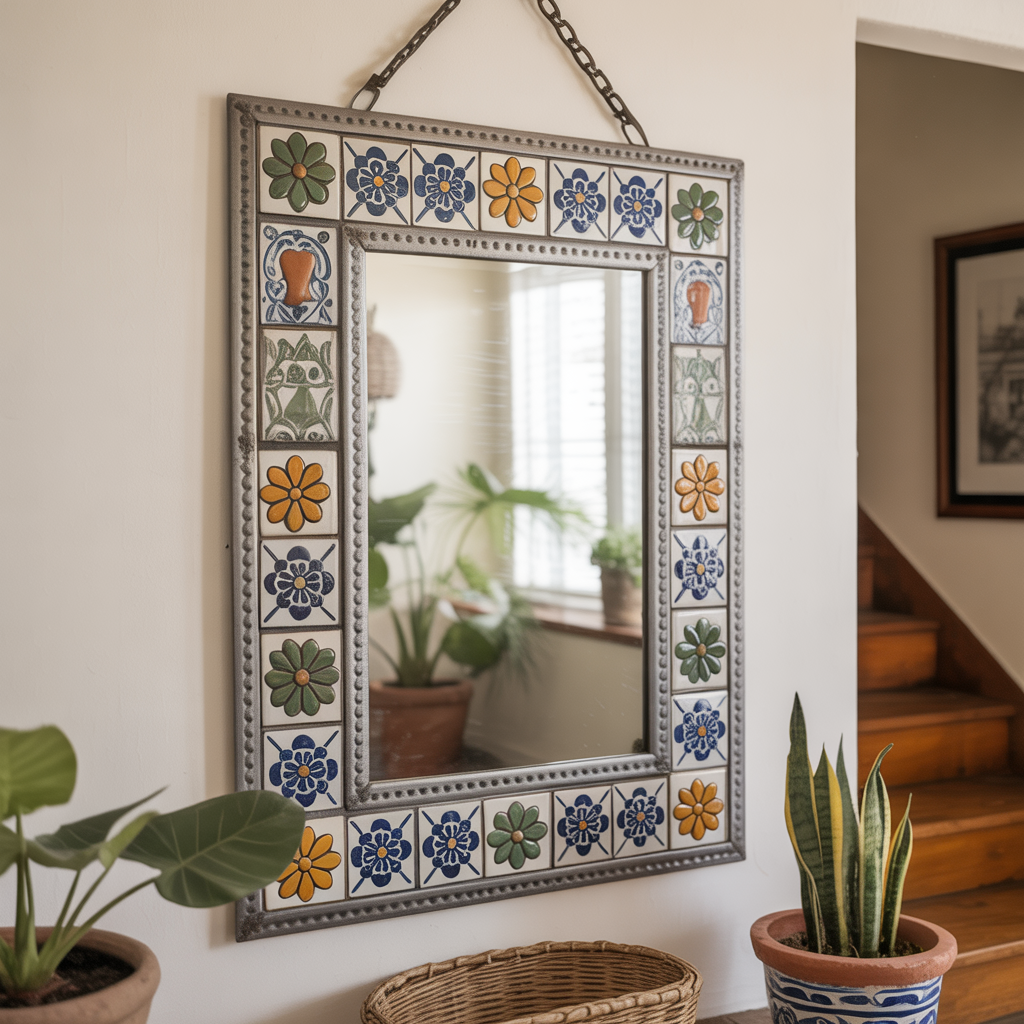
Mexican tin mirrors are created using punched tin frames and sometimes adorned with Talavera tiles. These mirrors are highly decorative and functional, reflecting light and creating a visual warmth in a room. Tin mirrors have cultural heritage rooted in colonial Mexico and have evolved into artisan-crafted decor that blends old and new styles.
These mirrors work in entryways, bedrooms, or bathrooms, and can serve as a focal point decor. Mixing Mexican tin mirrors with modern furniture or minimalist interiors creates layered interiors full of charm and rustic elegance. These reflective pieces are perfect for small space styling, adding both light and artistic expression to any area.
How to Choose Authentic Mexican Folk Art for Your Home
When buying handmade Mexican art, authenticity is crucial. Handmade pieces stand out because of handmade imperfections, artisanal craftsmanship, and centuries-old techniques. Mass-produced items lack the cultural depth and storytelling that make authentic Mexican decor so special.
Supporting local artisans ensures your decor has cultural connection and helps preserve living traditions. Before buying, check the materials, origin, and craftsmanship. Items like Talavera pottery, Alebrijes figurines, and Huichol bead art should reflect spiritual symbolism and community identity. Investing in authentic pieces guarantees soulful decor, colorful folk art pieces, and deeply personal spaces that bring joy and charm into your home.
FAQs About Mexican Folk Art Home Décor
Q1. Is Mexican folk art expensive?
A: Some pieces are affordable entry-level decor, such as small handwoven baskets or Talavera mugs, while collector pieces like large Alebrijes figurines or framed Huichol bead art can be higher in price.
Q2. Can it work in modern interiors?
A: Absolutely. Handmade Mexican art works beautifully in modern, boho, rustic, or eclectic interiors. Mixing folk art with neutral palettes or minimalist furniture creates a layered interior full of warmth and character.
Q3. How do I care for handmade pieces?
A: Clean ceramics with gentle soap and water. Keep textiles out of direct sunlight to preserve earthy tones. Dust tin mirrors and beadwork regularly, and handle hand-carved wooden figurines with care to maintain their artisan-crafted decor quality.
Mexican folk art is more than decoration; it is a cultural home decoration that brings joyful design, personal storytelling, and colorful folk art pieces into your living spaces. From Talavera pottery to Mexican tin mirrors, these items offer soulful decor, vibrant colors, and rich textures that brighten every room and create a deeply personal space full of life and charm.

 By
By